
Filipino Culture and Arts, Folklore, Popular Culture
Lumad, a Cebuano term for "indigenous" or "native," is the generic term for non-Muslim non-Christian indigenous peoples (IP) of Mindanao. Anthropologists say they were the first settlers of Mindanao and were of Austronesian ancestry after the last Ice Age, arriving in flimsy boats (balanghay). It took thousands of years for them to arrive and settle in Mindanao, and were ethnically and linguistically diverse, like a rainbow.

In the entresuelo of a house on calle Fonda in the walled city of Manila, there lived in the year 1745 a stonemason, or albalil, named Pedro Gil. He had been brought to Manila years before by the Franciscans, to help direct and aid in the building of their churches and conventos, and a meager remuneration kept him constantly in distressed circumstances. Like most Spaniards, he had married young. His spouse was a woman of buxom health, he therefore possessed the poor-man's wealth - a horde of ravenous children.
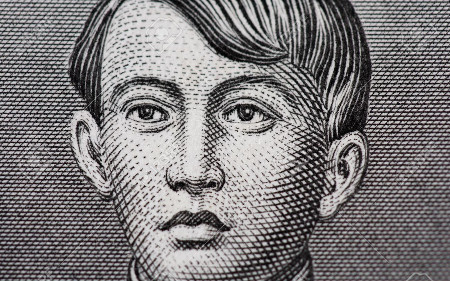
(This is direct translation of the complete text of the Kartilya from Tagalog by Epifanio delos Santos)
Association of the Sons of the People
To those who may desire to affiliate with this Association.
In order that those who wish to join this Association may have a thorough knowledge of its purposes and of its existing regulations, it is necessary that these be published, to the end that they may not to-morrow or the day after repent, and.that they may perform their duties cheerfully.
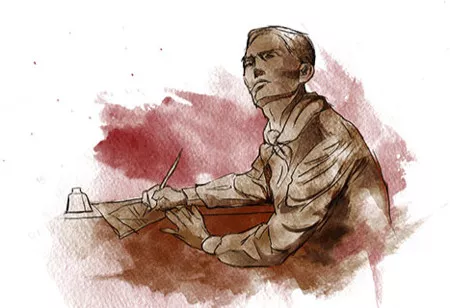
(Translated from Tagalog by Epifanio delos Santos, its orignal title is "Pag-ibig sa Tinubuang Bayan")
Is there any love that is nobler Purer and more sublime Than the love of the native country? What love is? Certainly none.
This collection is the work of famous Filipino artists, Fernando Amorsolo, Pablo Amorsolo, Fabian dela Rosa, and I. L. Miranda. All of the 12 paintings and pastel drawings were made for the covers of Philippine Magazine from June 1928 to May 1929. Attractive as they are, they must not be taken as representing the best work of these painters.
Perhaps very few people other than Ilocanos (1) know that the first Filipino literary man to achieve more than national renown was Pedro Bukaneg, father of Ilocano literature and prince of Ilocano poets, who has been variously referred to by writers as a Moses, a Socrates, a Milton of the Philippines. This poet and philosopher was born towards the end of the sixteenth century. He is not nationally known now, his fame being confined to the Ilocos region, but during his lifetime and for many years after his death, his fame spread beyond the nation's boundaries, reaching even as far as Madrid and Rome. (2)