
Significant Events in May in Filipino History
The nineteenth century in the Philippine archipelago marked a profound intellectual and social awakening - often called the "Filipino Enlightenment" and defined by the rise of the Ilustrados. At the forefront of this movement stood Graciano Lopez Jaena, whose life and writings supplied the early radical energy that would help ignite the Philippine Revolution of 1896.
Victoria "Vicky" Quirino-González stands as a unique figure in Philippine history - the youngest First Lady of the Philippines and a woman who came of age under extraordinary circumstances. Born during the height of her father's early political career, she endured one of the most tragic family catastrophes of World War II, yet emerged to fulfill her official duties with grace and dignity. Her life exemplifies resilience, civic duty, and the profound impact of historical trauma on an individual's character.
Venancio Concepción y Ochoa was a versatile figure in Philippine history, embodying the struggles and aspirations of a nation transitioning from Spanish colonial rule to American governance. As a General in the Philippine Revolution and Philippine-American War, a delegate to the Malolos Congress, a member of the Philippine Assembly, and the first Filipino president of the Philippine National Bank (PNB), Concepción played significant roles in both military and civilian spheres. However, his legacy is complex, marked by notable contributions to the fight for independence and a controversial tenure at PNB that led to legal troubles.
On May 18, 1899, a significant shift in power occurred when American forces assumed control from the Spanish government in Jolo, Sulu. Concurrently, General Vicente Alvarez triumphed over the Spaniards, leading to the capitulation of the final Spanish Governor-General in the Philippines, Diego de los Rios, in Zamboanga.
On May 19, 1893, the Maura Law was promulgated. Named after its author Antonio Maura y Montañer, who was then the Minister of Colonies of Spain. Its purpose was to confer upon the towns and provinces of Luzon and the Visayan Islands a greater measure of autonomy, with the exception of Manila whose government (at that time) was not altered.
On , the landscape of Philippine education was fundamentally altered. On this date, Queen Isabella II of Spain issued a Royal Decree that organized, standardized, and centralized Secondary Education (Segunda Enseñanza) in the Philippines. This was not merely an administrative adjustment; it was the creation of a definitive educational structure that would nurture the minds of the country's most pivotal generation - the Ilustrados.
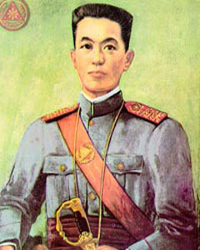
On May 20, 1898, Admiral Dewey set General Emilio Aguinaldo ashore at Cavite and got him to restart his insurrection "under the protection of our guns" as Dewey stated in his report of 1898.
General Aguinaldo who was in exile in Hongkong, returned to the command of the Philippine army through the support of Consul-General Smith of Singapore, and Consul Wildman of Hong Kong. He was carried to Manila Bay on the United States war vessel McCulloch by Admiral Dewey and supplied him with arms.