
Significant Events in November in Filipino History
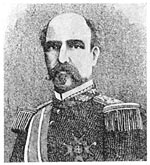
On November 18, 2024, the Philippines and the United States signed a significant military intelligence-sharing agreement, marking a deepening of security ties between the two nations. The agreement, known as the General Security of Military Information Agreement (GSOMIA), allows both countries to securely share classified military information.
On November 18, 1928, Salvador "Doy" Laurel, Cory Aquino's Vice President, was born in Paco, Manila. Laurel was the youngest son of Jose P. Laurel, president of the Japanese occupied Philippines and a justice of the Supreme Court during the American colonial period, and Paciencia Hidalgo, both came from Tanauan, Batangas.
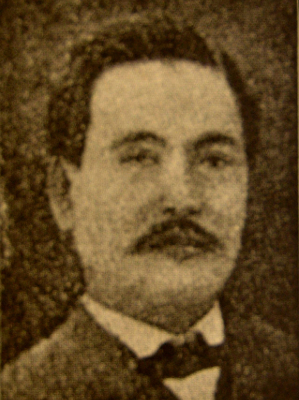
On November 18, 1833, Maximo Inocencio, a contractor, ship-builder, lumberman and one of the 13 martyrs of Cavite was born in Cavite. He was the oldest of the 13 martyrs.
Inocencio was first implicated in the Cavite Mutiny of 1872 and was subsequently exiled to Cartagena, Spain for 10 years. After his pardon, he returned to his hometown but was again implicated in the 1896 revolt and was subsequently executed on September 12, 1896 as one of the Thirteen Martyrs of Cavite.
On November 19, 1850, Isabelo Tampinco, one of the greatest Filipino wood sculptors who carved numerous religious wood sculptures in Manila and elsewhere, was born in Binondo, Manila.
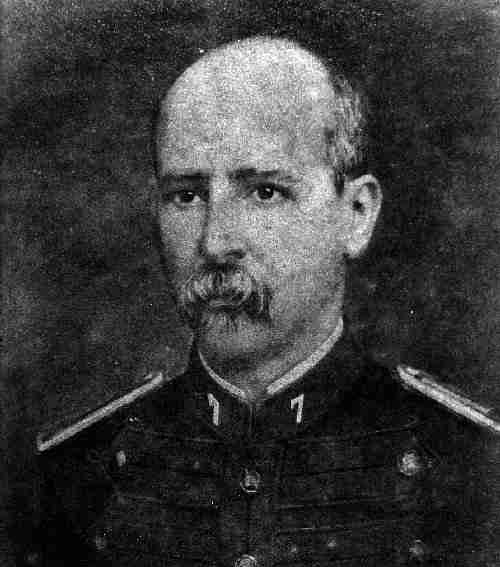
On November 21, 1849, Spanish Governor-General Narciso Clavería y Zaldúa issued one of the most consequential administrative decrees in Philippine colonial history - a mandate that would fundamentally reshape Filipino identity and genealogical records for centuries to come. The Claveria Decree represented a transformative moment when the Spanish colonial government formally standardized the naming system for Filipinos across the entire archipelago, establishing a practice whose effects persist in Filipino surnames to this day.