On , the First Philippine Republic, also known as the Malolos Republic, was inaugurated in Malolos, Bulacan with General Emilio Aguinaldo as President.

Significant Events in January in Filipino History
Manuel Tecson Yan, Sr. stands as one of the most distinguished figures in Philippine military and diplomatic history, a man whose 63 years of continuous public service spanned twelve Philippine presidents and left an indelible mark on the nation's journey toward peace and stability. Born on , in Manila to Jose Ramon Yan and Romana Tecson, Yan's life encompassed the tumultuous years of World War II, the challenges of nation-building, the dark period of Martial Law, and ultimately, the painstaking work of forging peace in Mindanao.
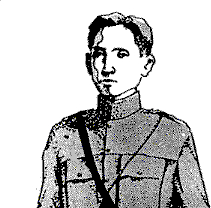
On January 24, 1917, the country lost one of its heroes with the death of General Quintin Salas who was acknowledged for his valor during the Visayan revolution against Spain and was among the last officers to surrender to the Americans.
Born on October 31, 1870 in Dumangas, Iloilo province, he was the town mayor or "Capitan Municipal" there when the revolution broke out in August 1896.
On January 25, 2015, a tragic event unfolded in Mamasapano, Maguindanao, that would forever be etched in the annals of Philippine history. The incident, known as the Mamasapano Clash, resulted in the deaths of 44 members of the Philippine National Police Special Action Force (PNP-SAF), a loss that shook the nation to its core.
On January 25, 1985, the then Central Bank (precursor to the Bangko Sentral ng Pilipinas (BSP)) ordered the closure of Banco Filipino Savings & Mortgage Bank or Banco Filipino by issuing Monetary Board Resolution 75 and placed under receivership upon discovery that the bank had become unviable to continue its operations. The Monetary Board said the bank has turned insolvent, and "would involve probable loss to its depositors and creditors."
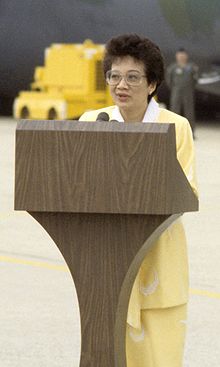
On January 25, 1933, Maria Corazon "Cory" Sumulong Cojuangco Aquino, the 11th President of the Philippines and the first woman to hold such office, was born in Manila.
Cory, as she is affectionately known, is best remembered for leading the 1986 EDSA People Power Revolution, which toppled the authoritarian regime of the late President Ferdinand Marcos and restored democracy in the Philippines.
She was revered by many Filipinos as the Philippines' "Icon of Democracy." She was also hailed by TIME Magazine as the "Saint of Democracy," due to her well-known spiritual life and strong adherence to non-violence and democracy.
On January 26, 1954, President Ramon Magsaysay issued Executive Ordtr No. 8, prohibiting the slaughtering of carabaos for a period of one year, beginning January 31, 1954. The President stated that Republic Act No. 11, approved September 2, 1946, prohibits the slaughtering of male and female carabaos, horses, mares, and cows, unless authorized by the Secretary of Agriculture and Natural Resources.
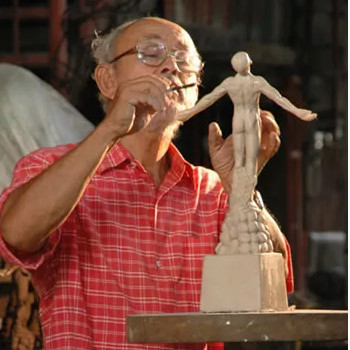
On January 26, 1930, Napoleon Abueva, the "Father of Modern Philippine Sculpture", was born in Tagbilaran, Bohol.
In 1976, at the age of 46, he was named National Artist of the Philippines for Visual Arts by the late President Ferdinand Marcos. He was the youngest recipient of the prestigious award.
Finishing his Bachelor of Fine Arts in Sculpture at the University of the Philippines (UP) in 1953 and his eventual pursuit of his studies abroad, Abueva helped shape the local sculpture scene in the Philippines.
Adept in both academic representational style and modern abstract, Abueva has utilized almost all kinds of materials from hard wood (molave, acacia, langka (jackfruit) wood, ipil, kamagong, palm wood and bamboo to adobe, metal, stainless steel, cement, marble, bronze, iron, alabaster, coral and brass.
Notably, Abueva received much recognition as early as his college years, during which he was mentored by Guillermo Tolentino, the first National Artist for Sculpture and creator of the UP Oblation.
For three years in a row (1951-1953), he won first prize and best entry awards in sculpture in the Art Association of the Philippines annual competition.
Juan Crisostomo Caballa Soto was born on , in Santa Ines, Bacolor, Pampanga. He was the second of three children born to Santiago Soto, an Alguacil (local official), and Marciana Caballa, a seamstress. Though he grew up in modest circumstances, Soto would become one of the most important figures in Philippine letters and the founding father of Capampangan literature.