
Most Visited Pages at the Kahimyang Project
Fernando Amorsolo y Cueto (1892-1972), Philippines' first National Artist in Painting (1972), the so-called "Grand Old Man of Philippine Art", Amorsolo earned a degree from the Liceo de Manila Art School in 1909 and entered the University of the Philippines' (UP) School of Fine Arts. He graduated with honors from the UP in 1914 and got study grant in Madrid, Spain. He was also able to visit New York, where he encountered postwar impressionism and cubism, which would be major influences on his work. The following are just a few of Amorsolo's work.
On June 5, 1899, General Antonio Luna, commanding general of the Philippine Revolutionary Army in the Philippine-American War, was killed in Cabanatuan, Nueva Ecija, not by American troops but by fellow Filipinos loyal to President Emilio Aguinaldo. His death, the culmination of internal rivalries and political fractures within the revolutionary leadership, removed one of the republic's most capable and uncompromising military strategists at a critical stage of the war against the United States.
In the 475 days since the late President Corazon C. Aquino created the Presidential Commission on Good Government (PCGG) on February 28, 1986, up to July 26, 1987, the last day of her revolutionary government, the PCGG sequestered more than 800 corporations, subsidiaries and other suspected ill-gotten wealth worth billions of pesos.
One almost forgotten chapter of Martial Law history was the "Light-A-Fire Movement". It was a group of prominent people who decided that violence was the solution against "abuses" of the Martial Law. They perpetrated many terroristic bombings in Metro Manila in the early 80's. They trained mostly in the United States, with targets here in the Philippines.
Salvador H. Laurel was Cory Aquino's vice-president and running mate in the 1986 snap elections. Laurel wrote Aquino on August 13, 1988 to signify his intention to leave her administration. The letter below is featured in the book by Cecilio T. Arillo "Greed and Betrayal". This also appeared in the opinion section of February 19, 2014 issue of the Manila Standard Today newspaper.
On February 17, 1872, three Filipino Catholic priests - Fathers Mariano Gomez, Jose Burgos, and Jacinto Zamora, collectively known as GOMBURZA - were executed by garrote in Bagumbayan (now Luneta Park), Manila. Their deaths, orchestrated by Spanish colonial authorities on false charges of subversion and treason, marked a pivotal moment in Philippine history, igniting the flames of nationalism and inspiring future generations to fight for freedom and justice.
TO the Filipinos: In Noli Me Tangere I started to sketch the present state of our native land. But the effect which my effort produced made me realize that, before attempting to unroll before your eyes the other pictures which were to follow, it was necessary first to post you on the past. So only can you fairly judge the present and estimate how much progress has been made during the three centuries (of Spanish rule).

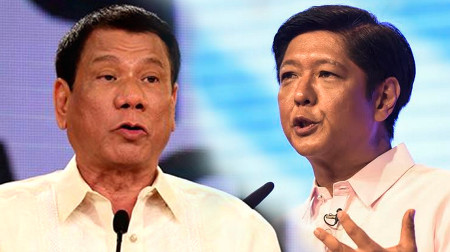
One of the biggest urban legends of recent times in the Philippines, is the story that the Cory Administration was supposedly the “cleanest” among the Administrations in the last three decades. Thanks to Nostalgia, and the fact that her Administration was at the dawn of the internet age, much of the negativities of that Administration has been largely forgotten, and people tend to remember only the "good" things about that Administration.
The 50s may be considered one "Golden Age" for the Filipino film because cinematic artistic breakthrough was achieved in that decade. Awards were first instituted in this era. The Manila Times Publishing Company set up the Maria Clara Awards in 1950.
In 1952, the FAMAS (Filipino Academy of Movie Arts and Sciences) Awards were handed out. More so, Filipino films started garnering awards in international film festivals. One such honor was bestowed on Manuel Conde's immortal movie Genghis Khan (1952) when it was accepted for screening at the Venice Film Festival. Other honors include awards for movies like Gerardo de Leon’s Ifugao (1954) and Lamberto Avellana’s Anak Dalita. These awards also had the effect of finally garnering for Filipino films their share of attention from fellow Filipinos.
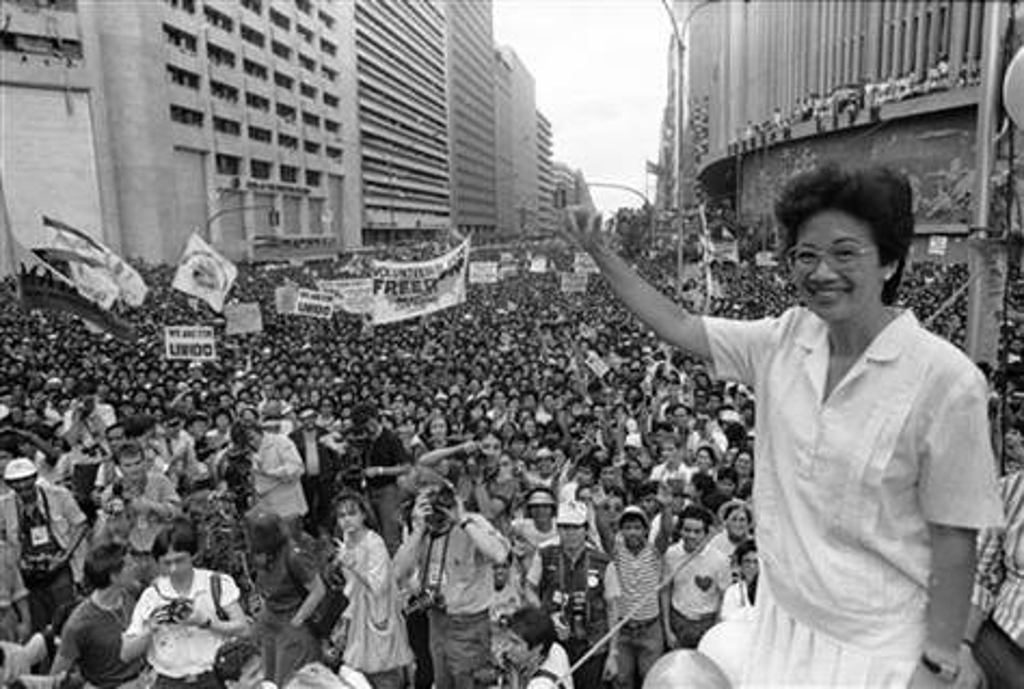
Let us first look at the country's energy situation for 12 years, a specific period covered by President Ferdinand E. Marcos's total energy plan for the country that succeeded on the right combination of regulated policies, resulting to the steady, low-cost supply of oil and cheap electricity to consumers.
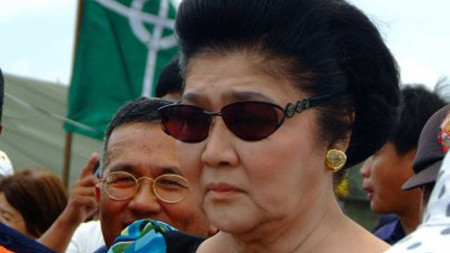
The Sandiganbayan has dismissed the 29-year-old forfeiture case against the late former President Ferdinand E. Marcos and his wife Ilocos Norte Rep. Imelda R. Marcos because of the lack of evidence to prove that the disputed properties were ill-gotten. The decision was promulgated on August 15, 2016, a copy of which was obtained by the media Wednesday, August 24.
On September 13, 1907, Macario Sakay, revolutionary leader and among the last of the Filipino resistance fighters to surrender to the Americans, was hanged inside the Old Bilibid Prison in Manila, together with Col. Lucio de Vega.
On , Dr. Jose Rizal's second novel, El Filibusterismo (The Reign of Greed), came off the press in Ghent, Belgium. Written in Spanish as the direct sequel to his 1887 masterpiece Noli Me Tangere, El Filibusterismo marked a critical turning point in Rizal's literary career and political thought - shifting from the reformist idealism of his youth to a stark, dark critique of Spanish colonial rule in the Philippines.
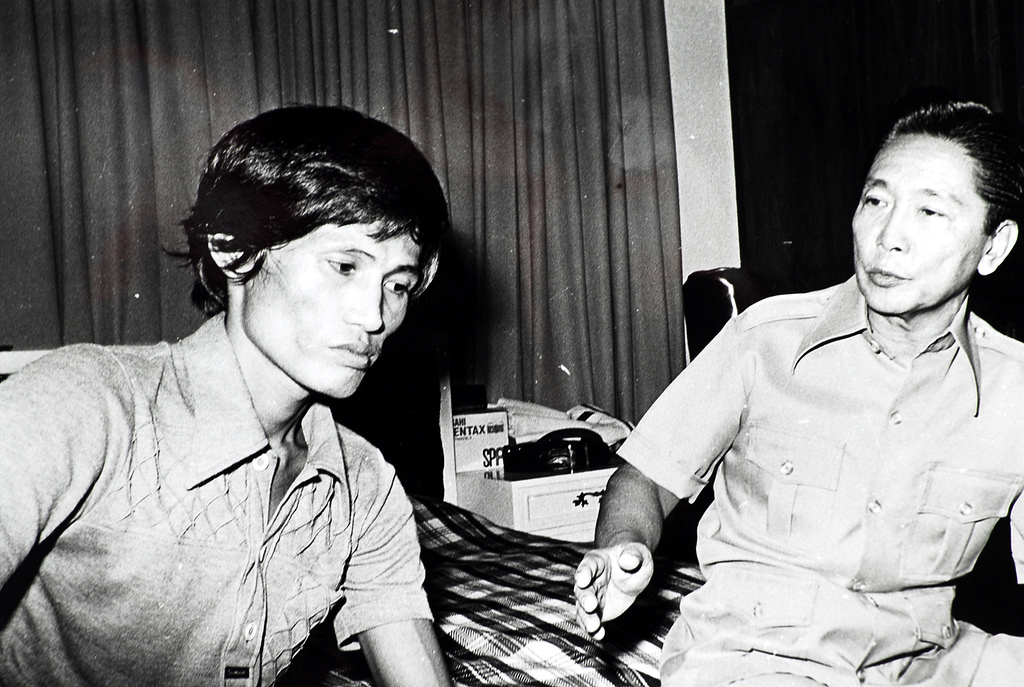
(A multi-awarded journalist, Rigoberto Tiglao was a Martial Law era political prisoner at the Camp Crame, Camp Aguinaldo and Camp Bonifacio from March 1973 to December 1974. A columnist for The Manila Times, he is one of the founders of the Philippine Center for Investigative Journalism.)
For almost the entire period of martial law, Juan Ponce Enrile (now a senator), served officially as Martial Law administrator and Defense Secretary in charge of all the armed forces' services during that time. Fidel V. Ramos, who later became President of the Philippines, was director of both the Philippine Constabulary (PC) and Philippine Integrated Police (PIP) during the Martial Law days. The two of them commanded the soldiers and police, who allegedly committed horrible human rights abuses during that regime.
On December 30, 1896, Dr. Jose Protacio Rizal, the greatest man of the Malayan race, was shot to death at Bagumbayan (present day Luneta or Rizal park), Manila, by a firing squad of native soldiers, on the accusation of political conspiracy and sedition, and rebellion against the Spanish government in the Philippines.
It was hoped by the ecclesiastical and civil authorities that Rizal's life would end with his death in Bagumbayan. But from the day of his execution to this day, Rizal has been in this country a living issue and often a burning one – the soul of contention between Catholics and freethinkers, a bone for the tug of war between church and state in the control of education, and the subject of bitter debate over the authenticity or fraudulence of his supposed retraction of his words and deeds.
Few figures have shaped the modern political and legal landscape of the Philippines quite like Miriam Defensor Santiago ( – ). Famously known as the "Dragon Lady", the "Incorruptible Lady", and "The Iron Lady of Asia", Santiago remains a singular force in Philippine history. She holds the distinct honor of having served with immense brilliance across all three branches of government - judicial, executive, and legislative - while permanently embedding herself in Filipino pop culture as an intellectual titan who could conquer a corrupt bureaucracy or win over a stadium full of students with equal ease.

Benigno "Ninoy" Aquino Jr. was the pre-eminent figure of the anti-Marcos struggle. Even before the declaration of martial law, he was one of the most vocal critics of President Ferdinand E. Marcos. He made speeches all in discrediting and destroying Marcos. In one such speeches he blew the cover behind Marcos' national security project for Sabah, the Philippine territory, which had been incorporated into Malaysia against our formal protest. This ironically made Ninoy a "hero" to so many naive and unthinking Filipinos, who had no appreciation of the paramount national interest involved. To this day we suffer the consequences of that highly irresponsible and "treasonous" act.
Force into exile by the connivance of her own government with that of the most powerful country in the world; uprooted from her land of birth; divested of resources to survive and the honor of a name; widowed and absolutely alone, the former First Lady and now Representative Imelda Romualdez Marcos of Second District of Ilocos Norte recreated the mothering of the true, the good and the beautiful from the nothingness of that state into the spiritual strength of love, a love that surrendered itself completely to the wisdom of a mothering God.
On November 9, 1827, Teodora Morales Alonzo Realonda de Rizal y Quintos, the mother of Philippine national hero Jose Rizal, was born in Meisik, Tondo, Manila. She was known for being a disciplinarian as well as a dedicated, courteous and hard-working mother.
In the night of July 3, 1892, Dr. Jose Rizal founded and inaugurated the La Liga Filipina at house No. 176 Ilaya St., Tondo. It was formed not for the purpose of independence, but for mutual aid and protection of its members, and the fostering of a more united spirit among Filipinos. Its constitution declared the ends, form, duties of members and officials, rights of members and officials, the investment of funds, and general rules.
Geronimo "Ronnie" Zamora Velasco, who built the Philippines' power system, including Southeast Asia's first nuclear power plant, while serving as the Minister of Energy and CEO of the Philippines National Oil Company during the rule of President Ferdinand Marcos from 1972 to 1986, died on July 17, 2007 at the age of 80, in San Francisco, of a heart attack.
Irwin Ver was the de facto chief of the presidential guards and son of AFP Chief General Fabian Ver. Ver recounts in great detail the other story of People Power: the last negotiations before the Marcoses' flight out of Malacañang, and that one chopper ride that could have changed the course of Philippine history.
Before the Cojuangco family acquired Hacienda Luisita in the 1950s, it belonged to the Spanish-owned Compaña General de Tabacos de Filipinas (Tabacalera). Tabacalera acquired the land in 1882 from the Spanish crown, which had a self-appointed claim on the lands as the Philippines' colonial master. Luisita was named after Luisa, the wife of the top official of Tabacalera.